The story
I didn't decide to build a hospital system and then go looking for problems. The problems were already on my desk. Through medical school, internship at a regional referral hospital, and now clinical practice at Consolata Hospital Ikonda, the same pattern kept repeating. The medicine was sound, but the information around it kept failing: files that couldn't be found, results that arrived after decisions had to be made, and hours of clinician time spent transcribing the same facts onto new pieces of paper.
Before medicine, I spent years fixing computers for a living. That work taught me to treat every fault as a system problem: reproduce it, isolate the layer, fix the cause rather than the symptom. Medilog is that method applied to the workflow I now live inside every day. I'm not building it as an outside vendor guessing at hospital life. I'm building it between ward rounds, from the records I actually handle.
The problem
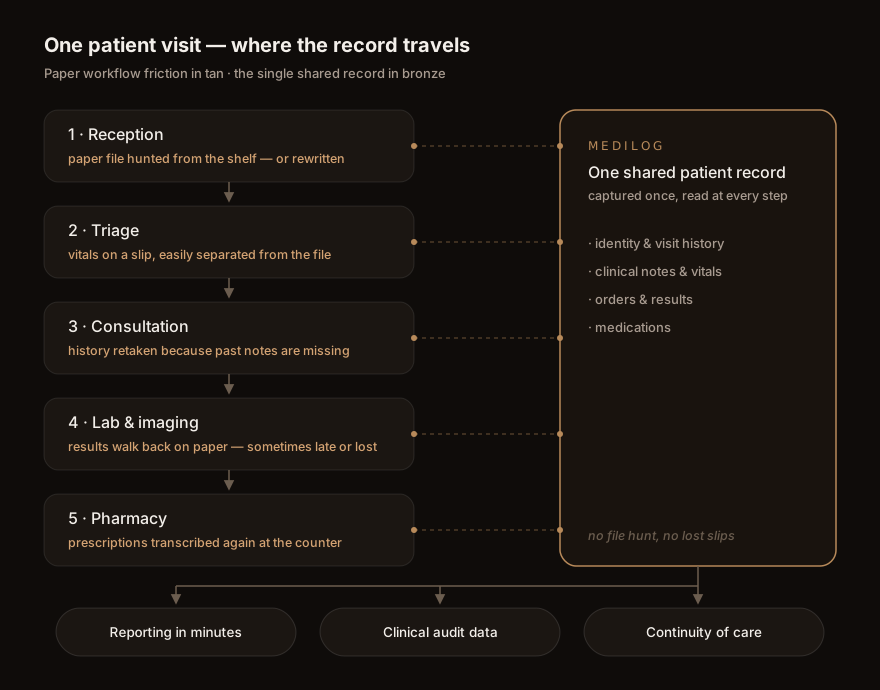
A patient arrives for follow-up. Their file is somewhere in the registry, in another department, misfiled, or gone. So the history gets retaken from memory, the previous plan is reconstructed from what the patient recalls, and a test that was already done gets ordered again. Nothing about this is rare; it is an ordinary morning in most paper-first facilities.
The costs compound:
- Continuity breaks. Each visit starts nearly from zero, and what the last clinician knew is lost with the file.
- Time leaks. Clinicians document the same information repeatedly; at month-end, facility reports are tallied by hand from paper registers.
- Decisions wait. Results travel on slips of paper at walking pace, and care waits with them.
The approach
Three decisions shape Medilog more than any feature list:
- The patient record is the spine. One record, captured once, readable at every step of the visit: reception, triage, consultation, lab, pharmacy. Most of the pain in Fig. 1 is not a missing feature; it's the absence of a shared record.
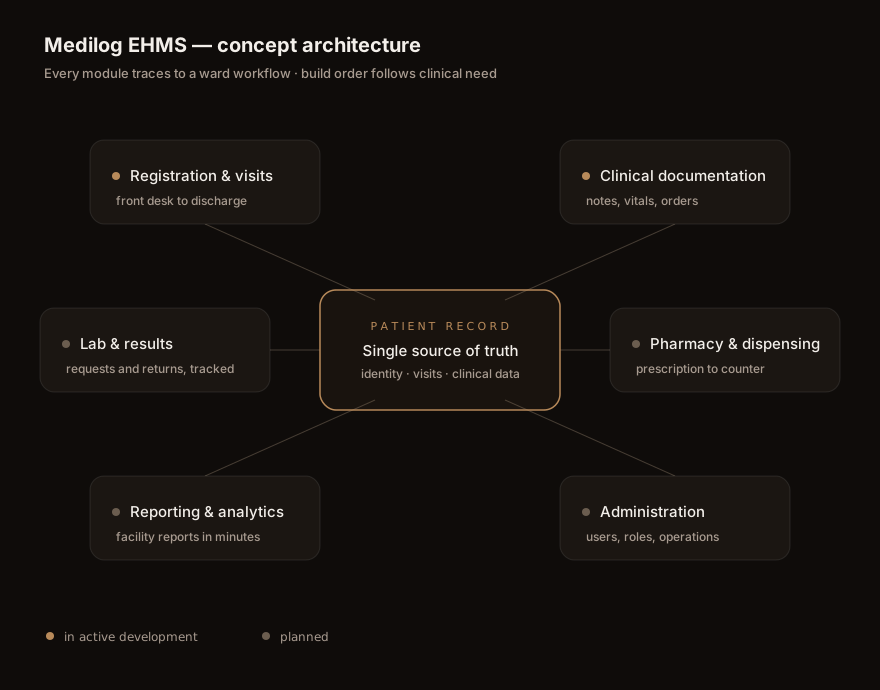
- Design from the ward outward. Every module must trace to a workflow I or my colleagues actually perform. If a screen doesn't map to something that happens in a Tanzanian hospital corridor, it doesn't belong in the product.
- Honest, incremental scope. Registration and clinical documentation first, because that's where continuity dies today. Lab, pharmacy, reporting, and administration are mapped, and labeled planned, not promised.
Where it stands
As of June 2026, Medilog is in active development: the patient-record data model and the registration and clinical-documentation workflows are being built and tested against daily practice at Ikonda. Next steps, in order: close the documentation loop on a full outpatient visit, then extend the record to lab requests and results.
If you work in healthcare delivery, health-tech, or hospital administration and this problem looks familiar, I'd genuinely like to compare notes, so get in touch.