The study
This was my MD research at the Catholic University of Health and Allied Sciences (CUHAS), Bugando, built on a question I kept running into clinically before I had numbers for it: children with autism seem to carry a heavier gut-symptom burden than their peers, but almost none of the evidence comes from this region. Most of the literature is from elsewhere, and prevalence figures swing wildly between studies. For Mwanza specifically, there was effectively nothing to point to.
So I ran a cross-sectional study comparing gastrointestinal (GI) symptoms in children diagnosed with Autism Spectrum Disorder (ASD) against typically developing children, to measure the gap locally rather than assume the imported numbers held.
The question
Are gastrointestinal symptoms more prevalent among children with Autism Spectrum Disorder than among typically developing children in the Mwanza Region, and what factors are associated with them?
How the study was run
A cross-sectional descriptive design, working through two institutions in Nyamagana district: the Li-TAFO Mwanza Centre, which supports children with developmental needs including ASD, and SOS Children's Villages. Caregivers answered a structured questionnaire (offered in English and Kiswahili) covering demographics, medical history, GI symptoms and their frequency, and possible contributing factors such as diet and the source and treatment of drinking water.
- Analysis: coded and cleaned in SPSS 27; Pearson's Chi-Square for symptom associations and binomial logistic regression for contributing factors.
- Ethics: clearance from the CUHAS/BMC research and ethics committee, informed caregiver consent, voluntary participation with the right to withdraw, and names omitted from questionnaires.
What it found
The headline gap was real and sizeable: roughly one in five autistic children carried GI symptoms, against about one in fifteen of their typically developing peers, and the association held up statistically (p < 0.05) across every symptom tested.
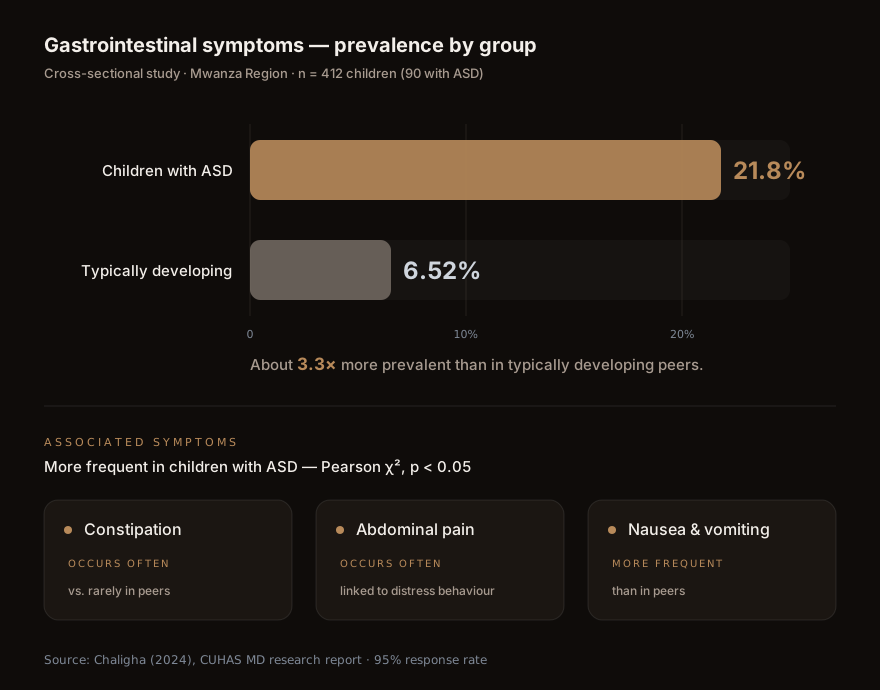
- Constipation and abdominal pain were the clearest signals: both significantly associated with ASD and reported as occurring often, not occasionally.
- Nausea and vomiting were also markedly more common among autistic children.
- The burden clustered young: ASD identification and GI symptoms were both highest in the 1–3 year age group, which points at early childhood as the window where screening would do the most good.
- Logistic regression hinted at sex and at the source and treatment of drinking water as associated factors, suggestive rather than settled, given small sub-group counts.
Why it matters
The practical takeaway is modest but concrete: in a setting where an autistic child may not be able to say where it hurts, GI symptoms go unspoken and untreated, and they can drive exactly the behaviour that gets read as "just the autism." The study argues for a few things:
- Routine GI screening for autistic children, especially in the early years.
- Caregiver education so symptoms are recognised and raised early.
- Attention to water safety where the association warrants it.
- Larger local studies to firm up the factor analysis.
What I took from it
Turning a ward-level hunch into a measurable, ethics-cleared study (recruitment, a bilingual instrument, balancing cases and controls, then defending what the numbers could and couldn't support) is the same discipline I now bring to Medilog EHMS: capture the right data carefully, and be honest about its limits. Good clinical software should make findings like these a by-product of care rather than a separate research project.
If you work in autism care, paediatrics, or public-health research in the region and want to compare notes, get in touch.